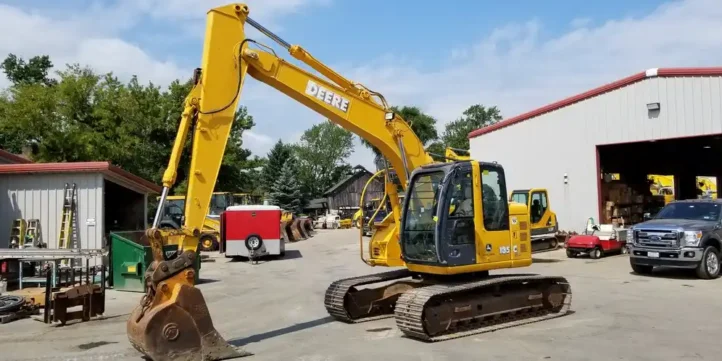
John Deere 135C RTS Excavator Repair Technical Manual
(TM2094)
structured to meet your needs for creating optimized, accurate technical content.
This manual is a comprehensive, system-focused repair guide, not a basic operator’s manual. Its structure is designed for technicians, moving from general specifications into detailed, component-level repair procedures.
Complete Manual Contents Breakdown
Manual Title: John Deere 135C RTS Excavator Repair Technical Manual
Manual Number: TM2094
Covered Models: 135C, 145C, 155C RTS Excavators (Serial Number prefixes: RW135C, RW145C, RW155C).
John Deere 135C RTS Excavator Repair Technical Manual
Major System Sections & Chapter Titles:
1. General Information (GI)
Safety and General Information
Identification and Record Keeping (Serial Number Locations, Product Identification Number [PIN] Explanation)
Specifications (Machine Dimensions, Weights, Performance Parameters, Fluid Capacities, Fluid Type Recommendations)
Maintenance Interval Charts: Detailed tables for every 50, 250, 500, 1000, 2000-hour service points, including engine, hydraulic, swing, and undercarriage checks.
2. Engine (EN)
Subsection: 6068T – John Deere Diesel Engine
General Engine Specifications
Operation and Diagnostics (Basic Troubleshooting)
Major Repair Procedures: Cylinder Head, Cylinder Liner, Piston and Connecting Rod, Crankshaft, Gear Group, Camshaft, Lubrication System, Cooling System, Fuel System (Injectors, Pump), Air Intake and Exhaust Systems.
3. Power Train (PT)
Hydraulic Pumps (Main Piston Pumps) – Operation, Testing, Removal & Installation, Disassembly & Assembly.
Travel Motors and Reduction Gears – Testing, Repair.
Swing Motor and Swing Gearbox – Testing, Repair.
Travel Brakes and Parking Brake – Adjustment, Repair.
4. Hydraulic System (HY)
A core section for excavator repair.
Hydraulic System Specifications and Schematics
Main Control Valve (MCCV) – Operation, Testing, Disassembly & Assembly.
Pilot Control System (Pilot Pump, Joystick Controls, Pedals) – Testing and Repair.
Cylinders (Stick, Boom, Bucket, Blade, Swing) – Disassembly, Seal Kits, Reassembly.
Hydraulic Oil Tank and Filters
Cooling System (Hydraulic Oil Cooler)
Hydraulic System Testing and Troubleshooting (Pressure Checks, Pump Flow Tests)
5. Electrical System (SE)
Wiring Diagrams (Complete, fold-out schematics for the entire machine).
Component Location Diagrams
Troubleshooting Outlines: Systematic diagnostic procedures for no-start conditions, warning light diagnosis, sensor failures.
Battery, Starting Motor, Alternator
Machine Control Modules (MCM, ECM) – Diagnostics, Parameter Listings.
Sensors and Switches (Pressure, Position, Temperature)
Operator’s Station (Monitor, Joystick Controllers)
6. Undercarriage (UC) – RTS (Rope-Track System) Specific
A critical and frequent repair area.
Track Frames and Components
Track Shoes and Pads (Adjustment, Replacement)
Idlers, Sprockets, and Rollers – Inspection, Removal, Bushing Wear Measurements.
Track Tensioning System (Grease Cylinder) – Adjustment, Repair.
7. Superstructure & Attachments (SU)
Swing Bearing (Slewing Ring) – Inspection, Clearance Check, Replacement.
Main Frame Structure
Cab and ROPS Structure
Work Tools (Quick Coupler System) – Hydraulic and Mechanical Service.
8. Steering & Braking (SB)
Integrated with the travel system in the Power Train section, but may include specific steering linkage and pedal adjustments.
9. Diagnosis & Troubleshooting (DZ)
This is integrated throughout each major system (e.g., “Engine Troubleshooting” in EN, “Hydraulic System Testing” in HY).
Typically includes: Symptom-Based Tables (e.g., “Engine Does Not Crank,” “Low Hydraulic Power,” “Travel on One Side Only”), Probable Cause Lists, and Recommended Actions that reference specific repair procedures.