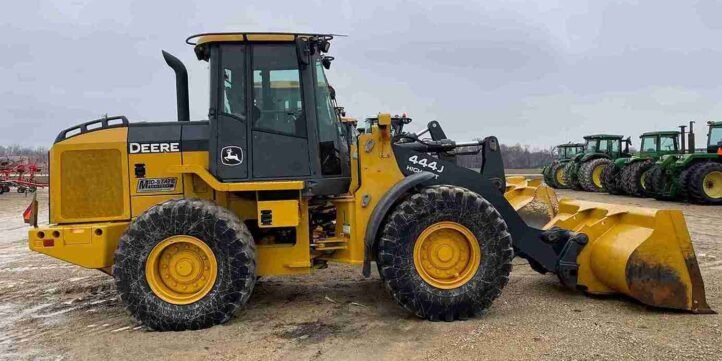
John Deere 444J Loader Operation and Test Technical Manual
John Deere 444J Loader Repair Technical Manual
Master the complex electronic and hydraulic architecture of your loader with the John Deere TM10228 Operation and Test Technical Manual. This guide is the ultimate diagnostic authority, providing the logic-based troubleshooting, DTC (Diagnostic Trouble Codes), and system-wide pressure benchmarks required for modern heavy equipment maintenance.
John Deere Loader Diagnostic Master | Technical Manual TM10228
| Section / Group | Diagnostic System | Technician’s “Hot Data” (Testing & Calibration Focus) |
|---|---|---|
| 9001: DTC Codes | CMU / ECU / TCU / FLC | Full library of Diagnostic Trouble Codes for the Monitor, Engine, Transmission, and Flex Load controllers. |
| 9005: Checkout | Operational Validation | A comprehensive baseline performance check to verify all machine functions and identify latent hardware or software faults. |
| 9010: Engine | Diagnostics & Tests | Power Analysis: Fuel rail pressure (PSI) benchmarks, sensor voltage ranges, and dynamic compression testing. |
| 9015: Electrical | Systems & Diagrams | Circuit Logic: Full-scale wiring schematics, CAN-bus architecture, and sub-system continuity testing for the SSM. |
| 9020: Power Train | Transmission Testing | Shift Logic: Solenoid engagement tests, transmission pressure benchmarks, and stall speed diagnostics. |
| 9025: Hydraulics | Main System Tests | Flow & PSI: Main pump efficiency (GPM), primary relief valve settings, and hydraulic cylinder cycle time benchmarks. |
| 9031: HVAC | Climate Controls | Operator Comfort: Refrigerant pressure-temperature charts, compressor duty-cycle tests, and blower circuit diagnostics. |
Strategic Diagnostic Solutions: John Deere TM10228 Advanced Troubleshooting
The John Deere TM10228 Operation and Test Manual is designed for high-level technicians dealing with computer-integrated systems. By utilizing the Diagnostic Trouble Codes for the ECU and TCU, as well as the specialized Flex Load Controller (FLC) data, you can move directly to the root cause of a failure, eliminating unnecessary parts-swapping and reducing downtime.
Key Technical Advantages for Field Service:
- Precision Code Analysis: Detailed troubleshooting for the Sealed Switch Module (SSM) and CAN Monitor Unit (CMU) to solve communication “ghost” errors.
- Systemic Testing: Move from theory to action with specific Adjustments and Tests for the Power Train and Main Hydraulic systems.
- OEM Benchmarking: Ensure every hydraulic pressure and electrical signal meets factory-specified Operational Checkout standards.